How Seasonal Demand Affects Tree Removal Costs
November 23, 2026

November 23, 2026

Planning a major landscaping project around Tampa Bay involves plenty of moving parts, and budgeting for hazardous or unwanted trees is often at the top of the list. Many homeowners assume that pricing for professional arborist work remains static throughout the calendar year, but the reality of the industry is far more dynamic. Weather patterns, local growth cycles, and emergency storm response create distinct waves of customer activity across Hillsborough, Pasco, and Polk counties.


Understanding how these shifting schedules influence pricing can help you plan ahead, avoid unexpected surcharges, and keep your property safe without straining your wallet. Whether you're dealing with an aging laurel oak leaning toward your roof or clearing space for a backyard renovation, timing your project strategically makes a measurable difference in the final invoice.


Understanding How Peak Summer Storms Drive Up Demand

Summer in Central Florida brings intense heat, daily afternoon thunderstorms, and the official arrival of Atlantic hurricane season. During these months, local crews are stretched thin responding to sudden wind damage, waterlogged soil failures, and lightning-struck trunks across communities from Brandon to South Tampa. Because high-risk emergencies naturally take priority over routine property maintenance, standard scheduling becomes much tighter for everyday requests.


When equipment like bucket trucks, cranes, and high-capacity wood chippers are constantly deployed on urgent calls, the availability for non-emergency tree removal drops significantly. Homeowners looking to schedule work during the height of summer often encounter longer wait times and higher baseline rates driven by simple supply and demand. Additionally, working in extreme Florida heat and navigating sudden squalls slows down crew efficiency, requiring extra safety protocols and hydration breaks that factor into overall operational costs.


Navigating How Autumn Hurricane Prep Strains Schedules

As summer transitions into fall, the Tampa Bay area enters the most active stretch of hurricane season, prompting a massive surge in preventative property care. Property managers, HOAs, and individual homeowners all rush to address deadwood, weak branch attachments, and overhanging limbs before major tropical systems threaten the Gulf Coast. This collective urgency creates an intense bottleneck for tree removal services throughout September, October, and early November.


According to HomeGuide, tree removal rates vary with the calendar, often running 10% to 20% higher during peak summer and fall demand than in the slower winter and early spring seasons. Beyond preventative storm preparation, autumn is also a popular time for homeowners to tackle outdoor renovations once the oppressive summer humidity begins to fade. Combining pre-storm safety checks with seasonal yard overhauls means ISA Certified Arborists and rigging crews are booked weeks in advance, keeping rates at their annual peak until the storm threat finally subsides.


Discovering How Mild Winter Weather Lowers Pricing

Once December arrives and the hurricane threat officially passes, the pace of the local arboriculture industry shifts dramatically. Florida's mild, dry winter weather creates ideal working conditions for heavy machinery and climbing crews, yet customer inquiries drop sharply as residents focus on the holidays. With fewer emergency calls disrupting daily routes, companies have much greater flexibility to schedule routine tree removal projects efficiently.


Dry ground conditions also mean heavy loaders and cranes can access tight residential lots in areas like Carrollwood or Temple Terrace with minimal risk of turf damage, reducing the need for extensive ground-matting labor. Because crews aren't competing with storm-damaged hazards or extreme weather delays, estimates during this quieter window are often much more competitive. Taking advantage of winter availability allows you to secure prompt service from experienced professionals while avoiding the premium pricing attached to busier months.


Leveraging How Early Spring Dormancy Maximizes Value

Early spring represents the final stretch of the off-season before the intense summer growth cycle and storm preparations begin anew. During February and March, many local deciduous trees are still emerging from dormancy, meaning canopies are lighter and easier for crews to navigate, rig, and dismantle safely. Scheduling tree removal during this transitional window allows arborists to inspect structural defects clearly without dense foliage obscuring trunk cracks or upper-canopy decay.


Furthermore, clearing hazardous or declining trees in early spring prevents them from becoming dangerous liabilities once summer squalls return, all while locking in lower off-season rates. Homeowners who plan ahead during these pleasant, low-humidity months enjoy faster turnaround times, easier permitting coordination, and smoother overall project execution. By acting before the late-spring rush begins, you protect your home's roof, fencing, and surrounding landscape without paying peak-season premiums.


Recognizing How Late Spring Growth Shifts Momentum

By the time April and May arrive across Central Florida, temperatures climb steadily and spring rain showers trigger rapid new foliage growth across oaks, palms, and pines. This burst of biological activity marks the transition out of the quiet off-season and back into heightened demand across neighborhoods from Valrico to Lutz. Denser, heavier canopies increase the overall weight of limbs and trunks, requiring more intricate rigging systems and additional hauling trips to local wood-recycling facilities.


At the same time, property owners begin noticing dead branches or structural leans that stood out against bare winter skies, prompting a fresh wave of service calls before summer officially begins. Because municipal permitting offices in Tampa and surrounding counties also experience heavier spring workloads, scheduling a tree removal project during late spring requires greater coordination. As calendars fill up with pre-summer trimming, crown reductions, and land-clearing jobs, pricing gradually climbs from off-season lows toward peak summer rates.


Evaluating How Emergency Weather Events Create Surcharges

While seasonal averages provide a reliable roadmap for budgeting, severe weather events can disrupt local pricing structures overnight regardless of the month. When a tropical storm, hurricane, or severe squall line sweeps through Hillsborough or Polk counties, fallen trees blocking driveways, resting on roofs, or tangling with utility lines demand immediate 24-hour emergency response. Operating cranes, bucket trucks, and climbing gear around unstable, tension-loaded timber requires specialized expertise, heightened safety measures, and extended overtime hours for skilled crews.


Insurance claims, municipal right-of-way clearing, and urgent HOA safety requests quickly absorb available regional equipment, creating acute short-term scarcity. Even if a storm strikes outside the traditional peak window, the sudden spike in hazardous tree removal work temporarily drives up labor and equipment costs across the entire Tampa Bay market. Proactive property inspections during calm weather remain the most reliable way to avoid paying urgent after-hours or storm-response premiums.


Ultimately, the calendar plays just as big a role in your final estimate as the size, species, and location of the tree on your property. While urgent storm damage and hazardous leaks require immediate attention regardless of the month, proactive homeowners have the power to control costs by scheduling non-emergency work strategically. Waiting until a tropical storm is brewing in the Gulf or until summer thunderstorms are rolling through every afternoon guarantees stiffer competition for crew time and higher overall expenses.


By shifting routine evaluations, stump grinding, and planned tree removal projects into the quieter winter and early spring months, you get the exact same licensed, insured expertise at a much more favorable rate. Keep an eye on your landscape year-round, address minor structural concerns before they escalate into emergencies, and let seasonal awareness guide your maintenance budget so you avoid unnecessary peak-season surcharges while keeping your yard healthy, safe, and well-maintained. If you're ready to evaluate your property and lock in a free estimate, call Mid-Florida Tree Service, Inc today.

tree trimming
November 14, 2026
Protect your landscape from pests and stress by learning how much foliage can safely be removed during tree trimming. Read our blog for proper pruning tips.
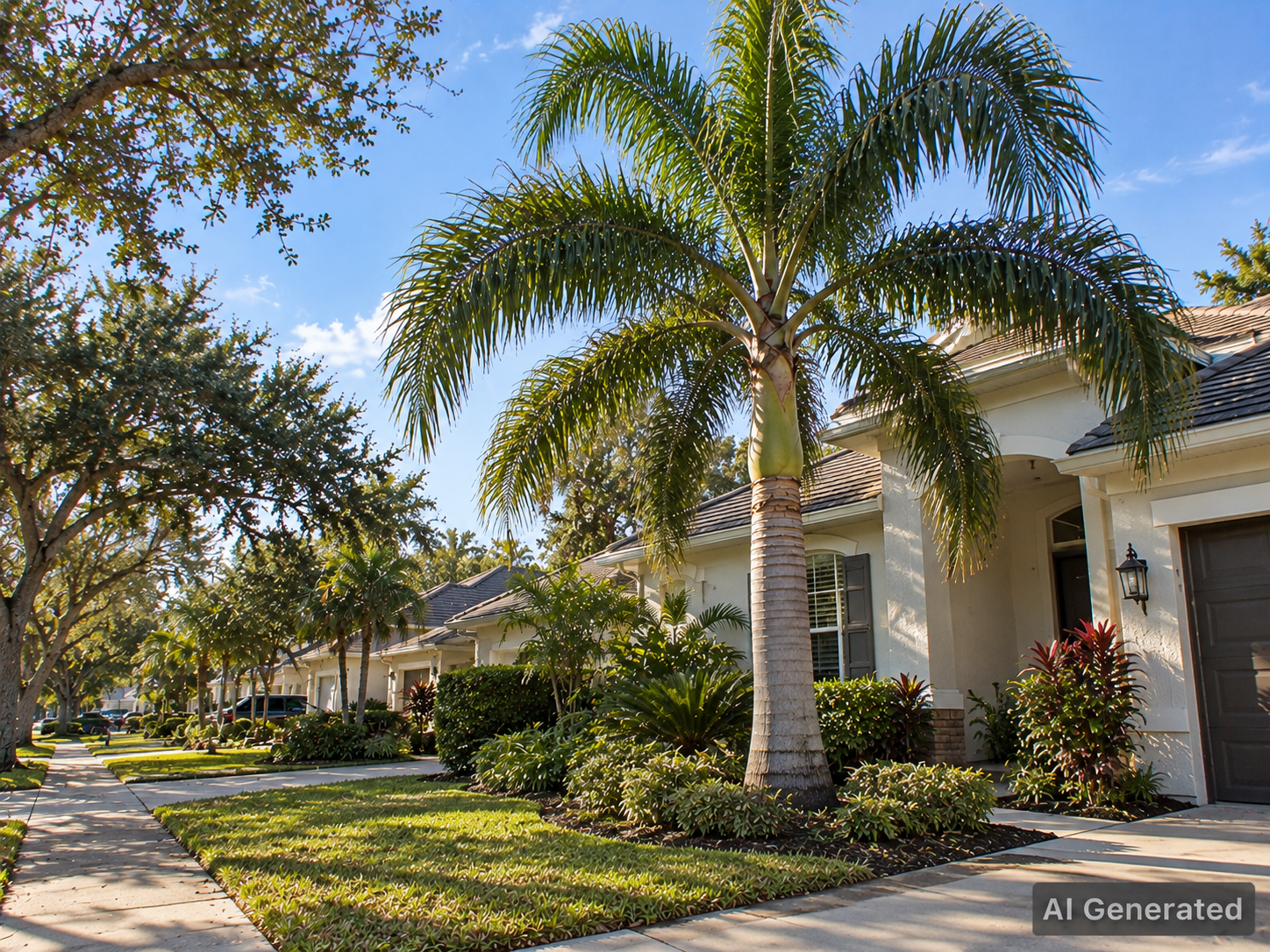
AI Generated image of a healthy, well maintained, palm tree in front of a Tampa Home.
By Mid-Florida Tree Service • October 28, 2026
Palm trees are a familiar part of Tampa's landscape, but they have different growing habits and maintenance needs than broadleaf trees such as oaks and maples. Discolored fronds, damaged trunks, and changes in new growth can indicate problems that deserve attention. Recognizing these warning signs helps homeowners determine when routine maintenance is enough and when a professional evaluation is necessary. Yellowing or Browning Fronds Palm fronds naturally age and eventually die. Older fronds near the bottom of the canopy turn brown as they reach the end of their lifespan. However, widespread discoloration or yellowing of younger fronds can indicate a problem. Nutrient deficiencies are common in Florida palms. Potassium and magnesium deficiencies can cause distinctive discoloration patterns, while manganese deficiency can severely affect developing leaves. The location and appearance of the symptoms matter. Applying fertilizer without identifying the problem can waste money and fail to address the underlying cause. Problems With New Growth Unlike most broadleaf trees, palms typically grow from a single growing point at the top of the trunk. The newest leaf, often called the spear leaf, emerges from this growing point. Damage or disease affecting this area can threaten the entire palm. Watch for new leaves that emerge distorted, fail to open normally, or collapse. A loose or rotting spear leaf is another serious warning sign. These symptoms deserve prompt attention because a palm cannot replace a destroyed growing point with new branches. Trunk Damage and Decay Palm trunks do not respond to wounds the same way hardwood trees do. They lack the vascular cambium that allows most broadleaf trees to produce new wood around injuries. Damage from lawn equipment, construction, or improper maintenance can leave lasting wounds. Fungal diseases can also affect palm trunks. Ganoderma butt rot, for example, causes internal decay in the lower trunk and can eventually produce a shelf-like fungal structure near the base. A palm showing signs of trunk decay needs professional evaluation. Internal deterioration can compromise its structural stability. Overpruning Can Harm Palm Trees Removing healthy green fronds unnecessarily reduces the palm's ability to produce energy through photosynthesis. Excessive pruning can also worsen nutrient deficiencies because palms move certain nutrients from older leaves into developing growth. The familiar hurricane cut, which leaves only a small cluster of upright fronds, is not recommended as routine palm maintenance. Proper palm pruning focuses on removing dead or otherwise appropriate fronds without stripping away healthy foliage. When Should a Palm Be Inspected? A palm with severely distorted new growth, suspected trunk decay, unusual leaning, or a rapidly declining canopy should be evaluated. Some palm problems can be managed when identified early. Others, including certain diseases that destroy essential growing tissue or compromise the trunk, can make removal necessary. At Mid-Florida Tree Service, our ISA Certified Arborists work with palms and other landscape trees throughout Tampa and Central Florida. We can evaluate palm condition, recommend appropriate maintenance, and determine when removal is necessary.  Call us at (813) 588-0315 to schedule a palm tree evaluation.
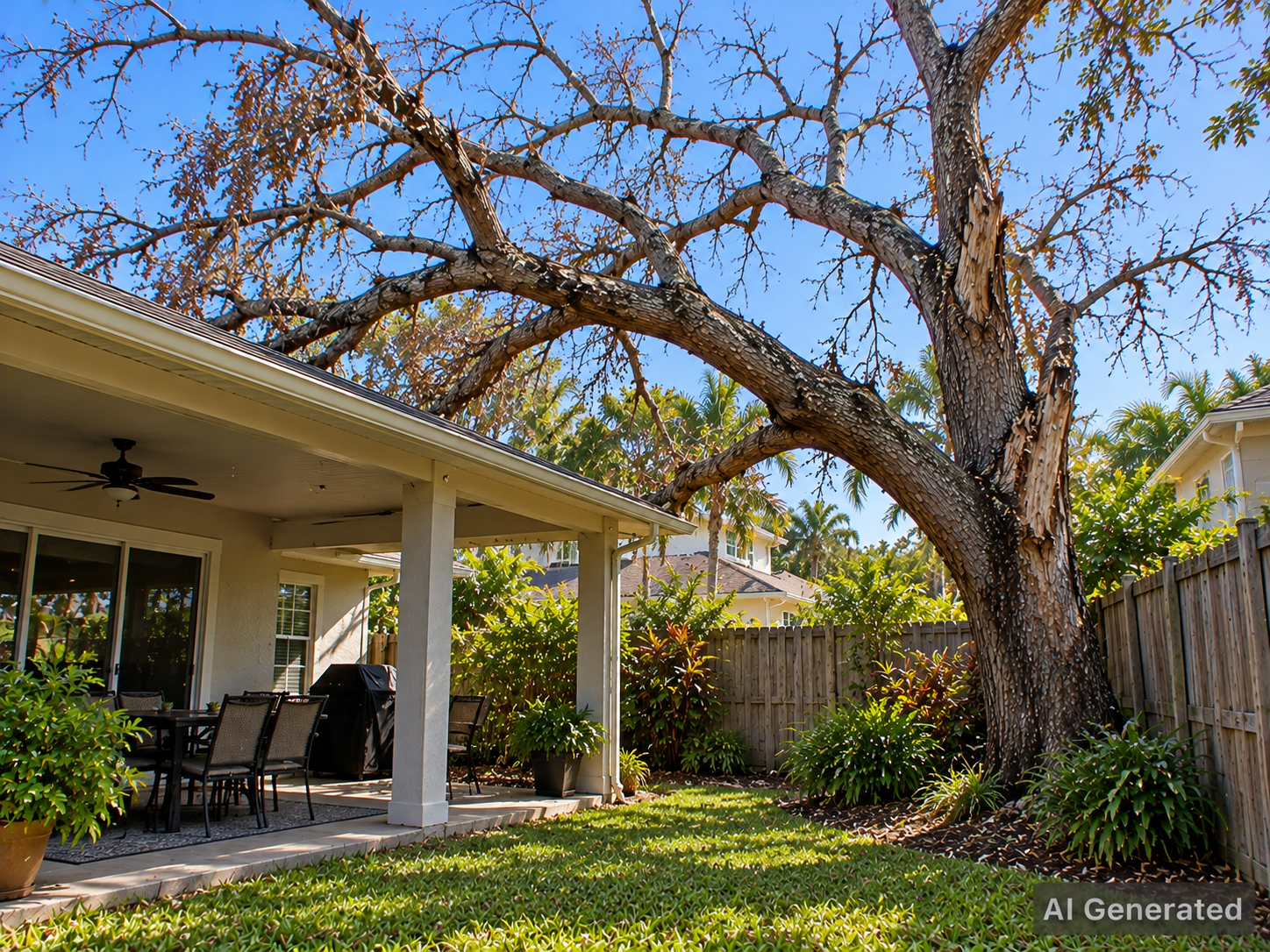
AI Generated tree to be removed. It is near a fence and overhangs the house.
By Mid-Florida Tree Service • October 28, 2026
Removing a large tree from a residential property is not always straightforward. In South Tampa, homes, fences, pools, utility lines, and established landscaping can leave limited room for equipment and falling branches. These conditions make planning an important part of professional tree removal. The goal is to remove the tree while protecting nearby structures and minimizing disruption to the surrounding property. Limited Access to the Tree One of the biggest challenges on smaller residential lots is getting equipment into position. A tree in an open yard offers more options than one growing between two houses or behind a home with narrow side-yard access. Fences, gates, overhead wires, and landscaping can restrict the movement of machinery and crews. Before beginning a removal, we evaluate access routes, working space, and obstacles that could affect the operation. Some situations require specialized equipment or additional preparation to reach the tree safely. Removing Trees Near Houses and Other Structures When a tree stands close to a house, allowing large branches or trunk sections to fall freely is often not an option. Professional crews can dismantle the tree in sections, controlling how branches and wood are lowered to the ground. Rigging systems allow workers to manage heavy pieces without dropping them onto roofs, fences, or landscaping. Crane-assisted removal is another option for certain properties. A crane can lift sections of a tree away from obstacles when site conditions allow appropriate equipment placement. The removal method depends on the tree's size, condition, location, and available working space. Protecting the Surrounding Property A mature tree can contain thousands of pounds of wood. Removing it requires more than cutting branches and hauling away debris. Nearby structures, underground utilities, irrigation systems, driveways, and landscaping all need consideration. Equipment placement and access routes are especially important when heavy machinery must operate near pavement or buried infrastructure. A professional removal plan accounts for these conditions before work begins. What About Tree Removal Permits in South Tampa? Tree removal regulations depend on the property's jurisdiction and the tree involved. Properties within the City of Tampa are subject to city tree regulations, including protections for certain trees. A Tampa mailing address does not necessarily establish that a property is within city limits. Before removing a regulated tree, homeowners should confirm whether a permit or other authorization is required. An ISA Certified Arborist can help evaluate the tree and explain the relevant considerations. Experience Matters With Difficult Removals Mid-Florida Tree Service has served the Tampa Bay area since 1976. Our crews have experience with large removals, crane work, storm damage, and complex situations where nearby structures limit working space. Whether a tree is growing between houses, beside a pool, or in a difficult-to-access backyard, we can evaluate the site and develop an appropriate removal plan. If you need professional tree removal in South Tampa, call Mid-Florida Tree Service at (813) 588-0315 to schedule an evaluation.

Show More →